Madurai Meenakshi Amman Temple: A Timeless Symbol of Devotion and Artistry
Sep 17, 2025
The Madurai Meenakshi Amman Temple, located in the ancient city of Madurai in Tamil Nadu, is one of the most magnificent representations of South Indian temple architecture and Hindu spirituality. Dedicated to Goddess Meenakshi, a form of Parvati, and Lord Sundareswarar, a form of Shiva, the temple is both a sacred space and an architectural wonder. It is not merely a place of worship but also a cultural and historical landmark that embodies the essence of Hindu culture. Thousands of devotees and tourists visit the temple each year, drawn by its spiritual aura, intricate carvings, and vibrant traditions. With its towering gopurams, richly decorated halls, and timeless legends, the temple continues to inspire awe, making it one of India’s greatest living monuments.
Historical Background
The origins of the Madurai Meenakshi Amman Temple can be traced back to the Pandya dynasty, which ruled over Madurai and contributed significantly to its construction and expansion. Early references to the temple date back over 2,500 years, making it one of the oldest centers of worship in the region. According to mythology, King Malayadhwaja Pandya and his queen, who were childless, prayed for an heir. Their prayers were answered with the birth of Goddess Meenakshi, who later married Lord Shiva. This divine union forms the core legend behind the temple.
Historically, the temple underwent continuous development under different rulers. While the Pandya kings laid its foundations, the Vijayanagara dynasty in the 14th and 15th centuries contributed immensely to its grandeur. Several Nayak rulers, particularly King Tirumalai Nayak (1623–1659), expanded the temple complex, adding monumental gopurams, halls, and shrines that we see today.
The temple also witnessed destruction during invasions, particularly during Malik Kafur’s raid in the 14th century. However, it was rebuilt and restored with even greater magnificence, symbolizing resilience and devotion. Over centuries, the Madurai Meenakshi Amman Temple became not only a religious center but also a cultural and political hub, influencing art, literature, and traditions across Tamil Nadu. Its layered history of construction, restoration, and patronage highlights the temple’s ability to withstand the test of time while retaining its sanctity.
Architectural Features
The Madurai Meenakshi Amman Temple is a masterpiece of Dravidian architecture, renowned for its intricate carvings, towering gateways, and symmetrical layout. Spanning more than 14 acres, the temple complex is a city within itself, featuring shrines, halls, corridors, and sacred water tanks.
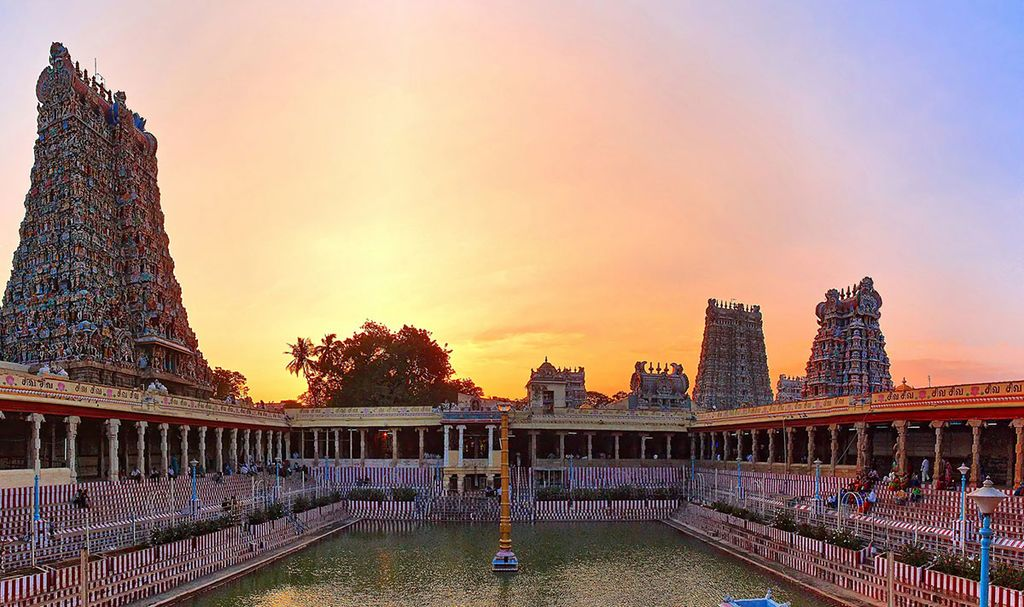
The most striking elements of the temple are its gopurams (gateway towers), which dominate the skyline of Madurai. There are 14 gopurams in total, with the tallest, the southern tower, rising to about 170 feet. Each gopuram is adorned with thousands of vividly painted sculptures depicting gods, goddesses, demons, and mythological stories. These elaborate towers serve not only as gateways but also as visual narratives of Hindu mythology.
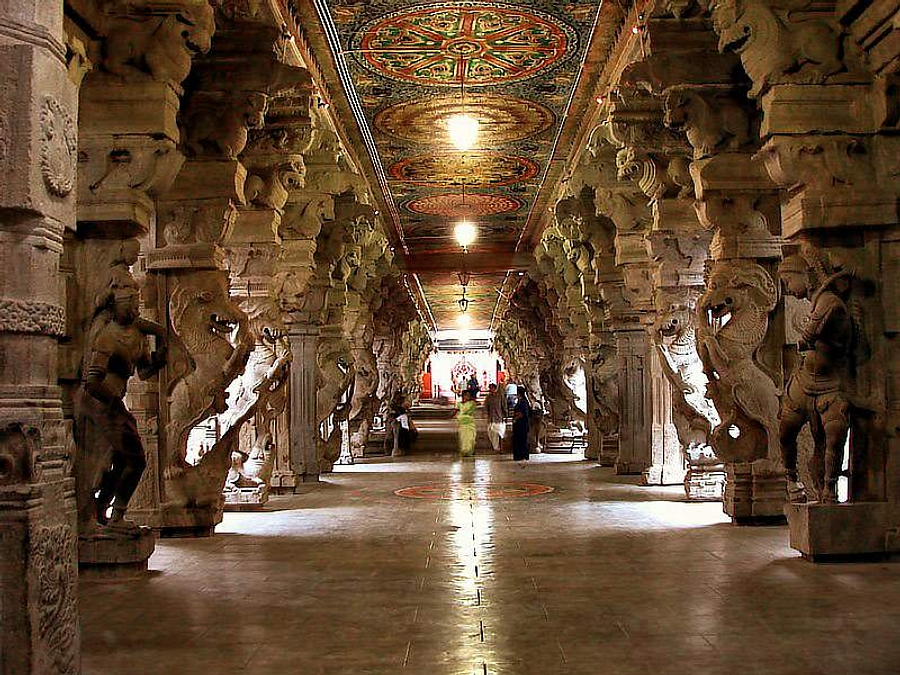
At the heart of the temple lies the sanctum of Goddess Meenakshi, identifiable by her fish-shaped eyes, a symbol of compassion. Opposite her shrine is that of Lord Sundareswarar, representing the divine union of Shiva and Parvati. Surrounding these sanctums are numerous mandapams (halls), each with distinct architectural brilliance. The Thousand Pillar Hall is particularly famous, featuring intricately carved granite pillars that, when struck, produce musical notes.
The temple’s corridors and walls are decorated with frescoes and murals that illustrate tales from the Puranas and local legends. The Golden Lotus Tank, a sacred water body within the temple, is central to many rituals and traditions. Beyond their religious function, these architectural features showcase the mastery of artisans who combined aesthetics with symbolism. The temple’s grandeur lies not only in its scale but also in the minute details of its carvings, making it a treasure trove of South Indian artistry.
Cultural Significance
The Madurai Meenakshi Amman Temple is more than a monument—it is a vibrant center of cultural and religious life. Every day, thousands of devotees visit the temple to participate in prayers, rituals, and ceremonies that have been practiced for centuries. The temple is a hub of Hindu culture, where spirituality and community life blend seamlessly.
The most celebrated event at the temple is the annual Meenakshi Thirukalyanam, the celestial wedding of Meenakshi and Sundareswarar. This festival, held in April or May, draws devotees from across India and abroad. The rituals, processions, music, and dance performed during the festival highlight the temple’s role as a living cultural stage.
Beyond festivals, the temple has deeply influenced Tamil literature and poetry. Ancient Sangam texts and devotional hymns frequently mention the temple, affirming its role as a sacred and cultural epicenter. For centuries, scholars, poets, and saints have drawn inspiration from the temple’s legends and architecture.
The temple also serves as a vital pilgrimage site, part of the spiritual circuit in South India. Pilgrims consider visiting the temple not only a religious duty but also a spiritual journey, reinforcing bonds with their faith. Furthermore, the temple has economic and social significance, sustaining artisans, priests, and the local community. Its enduring influence on Tamil culture underscores its role as a symbol of identity, pride, and devotion.
Conclusion
The Madurai Meenakshi Amman Temple stands as a beacon of faith, artistry, and resilience, embodying centuries of devotion and creativity. From its roots in the Pandya dynasty to the embellishments of the Nayak rulers, the temple reflects the evolution of Dravidian architecture and the spiritual aspirations of countless generations. Its gopurams, mandapams, and sanctums are not just architectural marvels but also carriers of mythology and culture.
Even today, the temple remains a vital part of community life, attracting devotees, scholars, and travelers alike. It symbolizes the inseparable bond between art and religion in India, serving as both a sacred space and a cultural landmark. Preserving the temple is not only about safeguarding stone and sculpture but also about nurturing the spiritual and cultural heritage it represents. As one of the grandest temples of India, the Madurai Meenakshi Amman Temple continues to inspire reverence, ensuring its legacy endures for generations to come.